
Virtual Numbers for Social Media: Keeping Your Accounts Separate
Contents
Virtual Numbers for Social Media: Keeping Your Accounts Separate
Quick Answers Before the Details
What is a virtual number used for here?
Why do individuals keep several profiles?
What do companies gain from separating accounts?
Is having more than one account permitted?
Why Individuals Divide Their Social Presence
Keeping a personal SIM off public profiles
What Separate Accounts Do for a Business
Company presence apart from personal presence
Dedicated profiles for promotional work
Market research from a neutral profile

Virtual Numbers for Social Media: Keeping Your Accounts Separate
Running more than one profile on a social platform is now normal for individuals and companies alike. Someone may want family photos kept apart from a public hobby page, while a company needs a brand presence that does not depend on an employee's personal login. Nearly every platform asks for a unique phone number or email address at sign-up, so using one personal SIM for each registration spreads that number across services you may not want to trust with it. Virtual numbers for social media offer another route: an online number that receives the SMS verification code during registration. Tiger SMS provides numbers of this kind and charges only when the code arrives.

Quick Answers Before the Details
What is a virtual number used for here?
It is an online phone number that receives a registration code by SMS. Tiger SMS supplies these numbers across a wide list of countries and platforms.
Why do individuals keep several profiles?
Different audiences expect different content, and dividing them limits how much of one part of your life is visible to another. Keeping a personal SIM off public profiles is a second reason.
What do companies gain from separating accounts?
A brand presence stays independent of any single employee, promotional work can sit in its own profile, and market research can run from an account that is clearly not anyone's private page.
Is having more than one account permitted?
Policies differ by platform, and each one sets its own terms. Reading those terms before registering matters more than any tool you use to sign up.
Why Individuals Divide Their Social Presence
One person, several audiences
A single feed rarely suits everyone who follows it. Relatives, colleagues, classmates from a language course, and people who share a niche interest all expect something different, and posting for all of them at once tends to please none of them. Splitting the audience solves that: a private page for close contacts, a public one for a craft or a sport, and a third for job-related activity.
Platform rules shape how far this can go. Instagram lets you stay signed in to as many as five profiles inside the app and switch between them, though each registration still needs its own email address or phone number. Meta takes a different position on Facebook, expecting one personal account per person while offering additional profiles under that account and Pages for anything public-facing. Checking a platform's current policy before you register saves effort later.
Users are responsible for following the rules of each platform they register for. Tiger SMS is not responsible for actions users take on third-party services and does not provide refunds if a successfully registered account is later blocked, banned, restricted, reviewed, or limited.
Keeping a personal SIM off public profiles
A mobile number works as an identifier. Several networks let other members search for someone by phone number, which can quietly connect a low-profile page to a person's real-world contacts. Marketing messages are a smaller but constant irritation, and every new sign-up adds another sender to the list arriving on a primary handset.
Receiving the confirmation code on an online number keeps the personal line out of that particular registration. This is a limited benefit, and worth describing honestly: it does not erase advertising identifiers, cookies, or anything else a platform records about behavior on the site. What it does is stop one specific detail — a private mobile number — from being attached to a profile where it serves no purpose.
What Separate Accounts Do for a Business
Company presence apart from personal presence
When a brand page is registered on a marketing manager's own SIM, the company's access depends on that individual. Password resets, two-factor prompts, and confirmation codes all land on a device the business does not control, and a resignation or a lost phone turns into an access problem. Registering brand assets against numbers that belong to the company's own workflow keeps the two apart from the start, and spares staff from handing over their private contact details as a condition of doing their job.
Dedicated profiles for promotional work
Advertising, contests, community management, and support conversations often sit better in their own profiles than in a main brand feed. Agencies face a broader version of the same task, since every client needs its own set of registrations rather than a shared one. Each of those registrations calls for a separate confirmation code, which is where volume becomes the practical obstacle: buying and maintaining a SIM card for every profile is slow and costly. Tiger SMS offers an API for teams handling verification at this scale, along with support that can advise on bulk arrangements.
Companies are responsible for following the rules of each service they use. Tiger SMS is not responsible for actions users take on third-party platforms and does not provide refunds if a successfully registered account is later blocked, banned, restricted, reviewed, or limited.
Market research from a neutral profile
Marketing teams study what competitors publish, how their communities react, and which formats gain traction. Doing that from an executive's personal page is awkward: the follow shows up publicly, the platform's recommendation engine starts feeding work-related material into a private feed, and the signals get mixed. A separate research profile, openly registered to the company rather than dressed up as a private individual, avoids the confusion.
Two limits deserve emphasis. Impersonating a real person, a competitor, or a brand you do not represent breaks the terms of every major network and is not something a virtual number makes acceptable. Anything a platform hides behind a login or a paywall stays out of reach, and a research account is no route around that.
Getting a Number Through Tiger SMS
Tiger SMS is a virtual number service for receiving SMS verification codes during online registration. The process works the same way on the website and through the Telegram bot:
1. Create an account or log in.
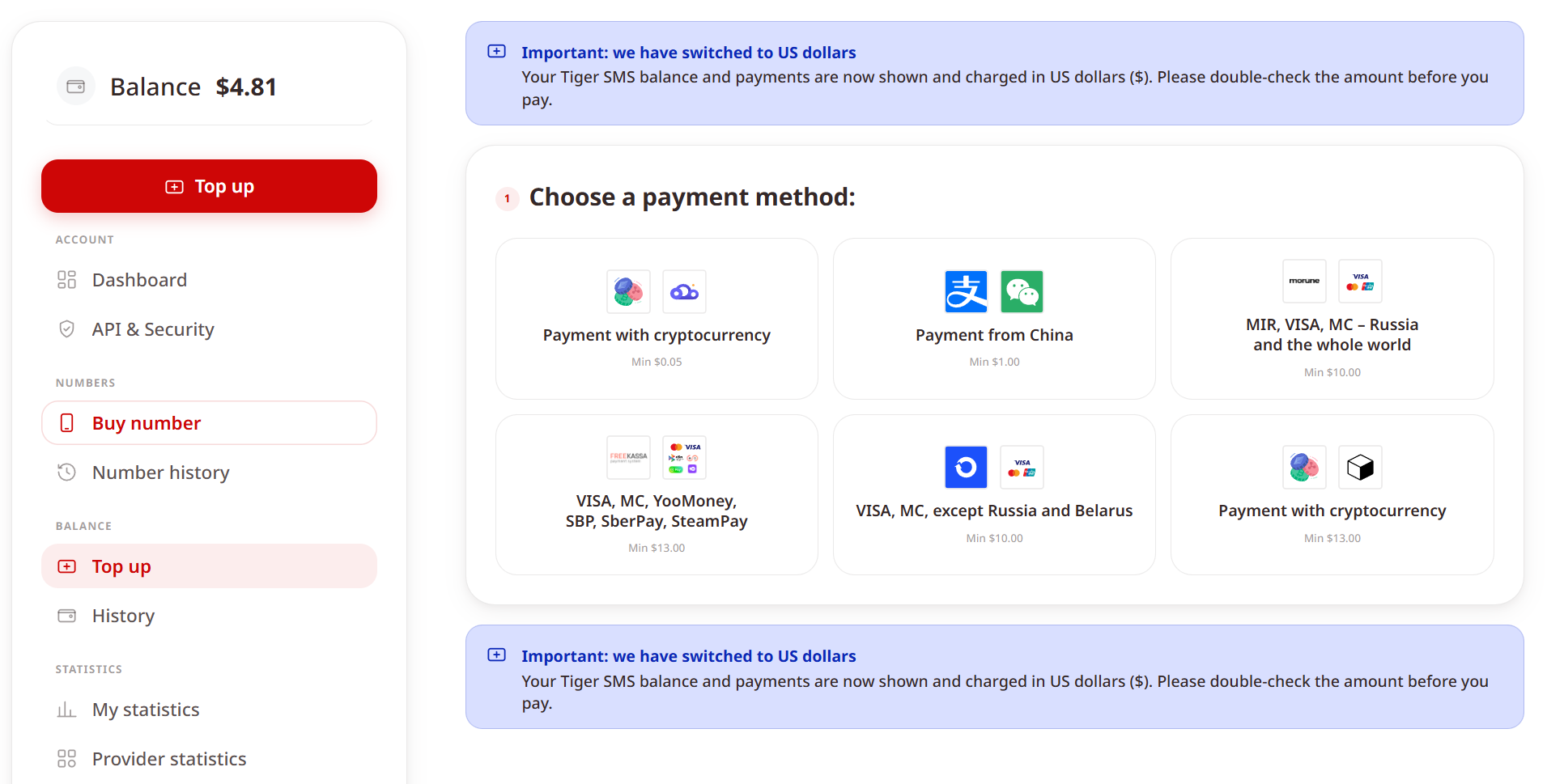
2. Add funds with one of the available payment methods, including options used in Russia and China.
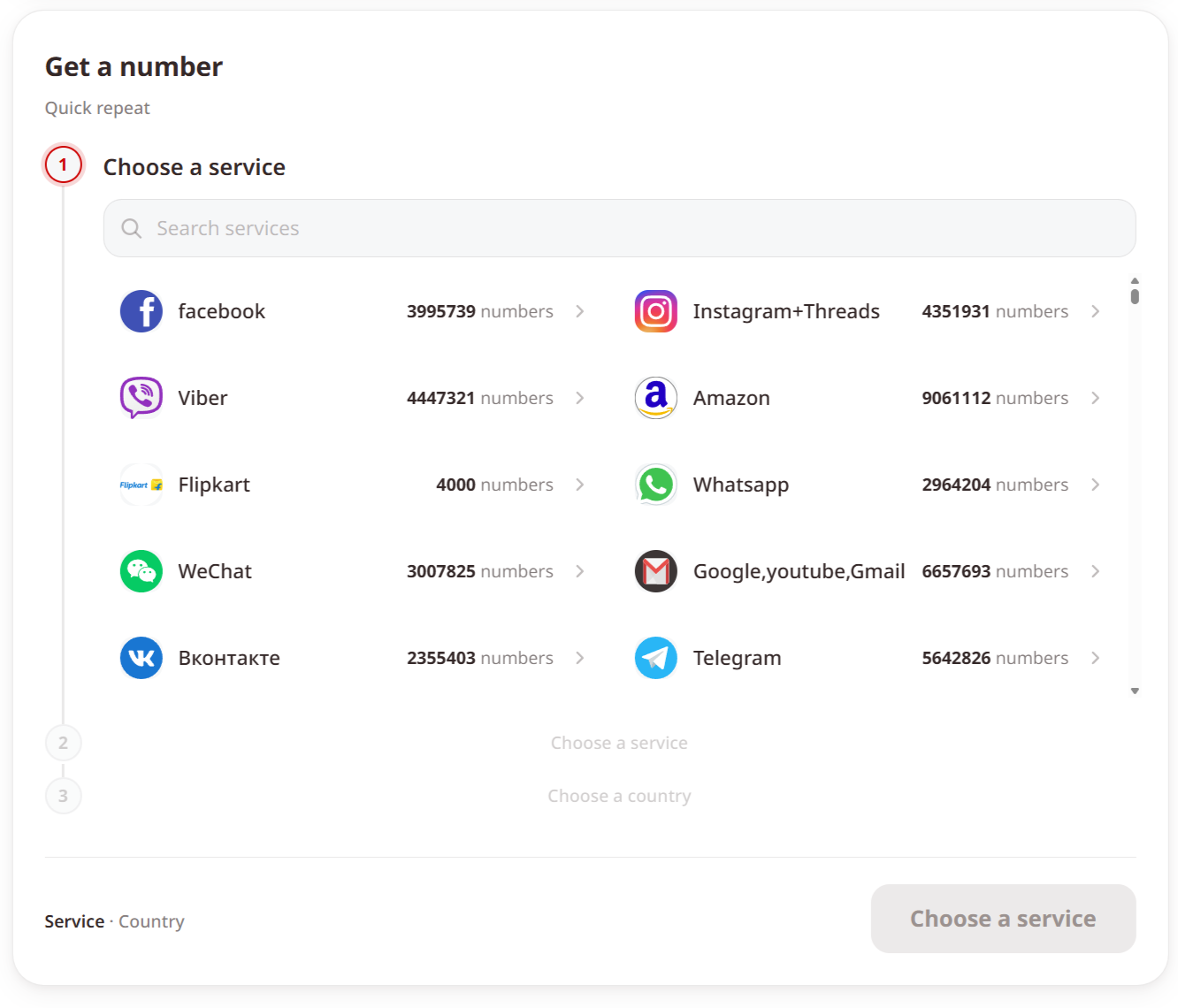
3. Select the platform you want to verify. If it is not listed, the "Any service" option exists, though availability is not guaranteed in that case.
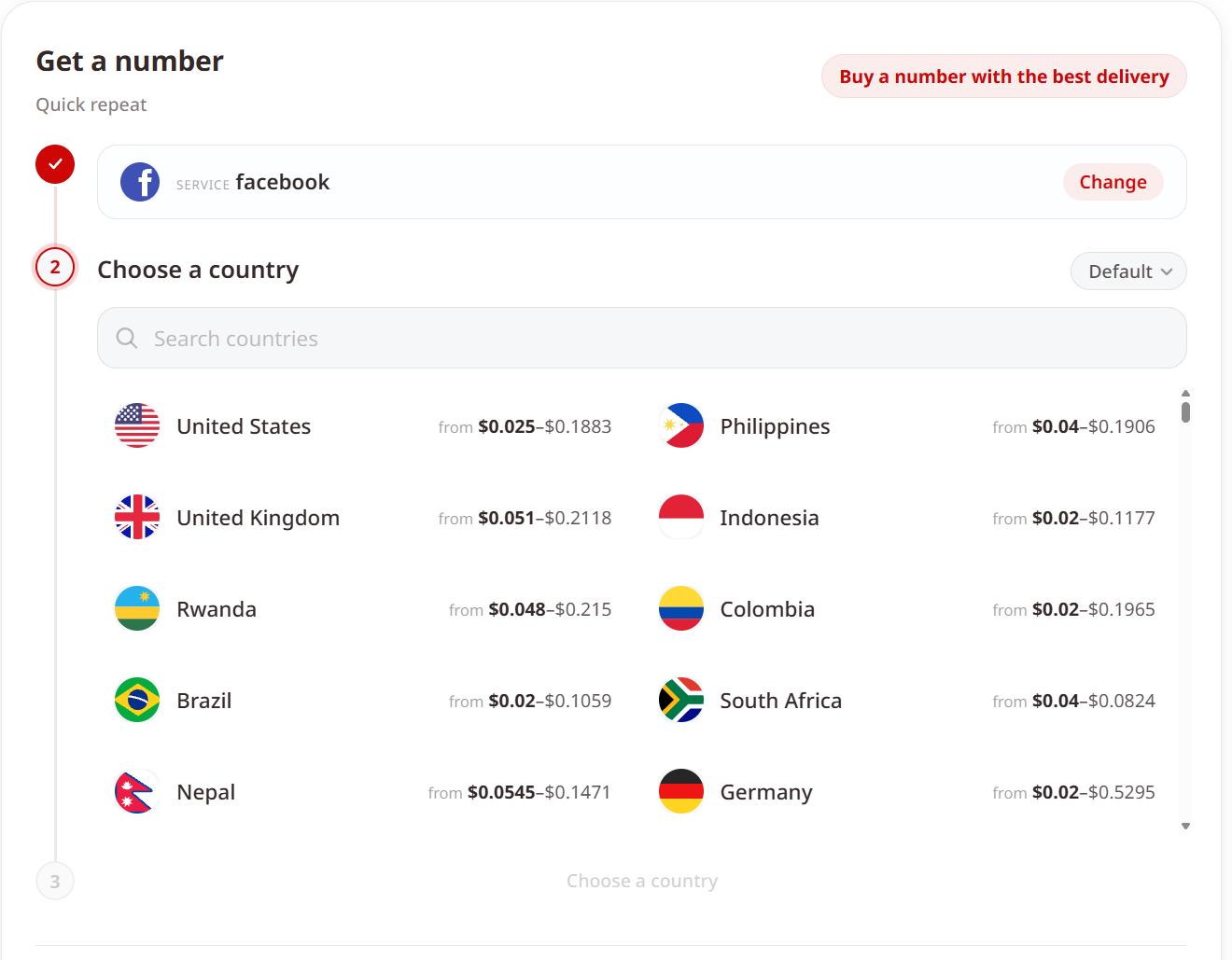
4. Select a country for the number. Tiger SMS warns you before payment when a platform is unavailable for the country you picked.
5. Request the number and enter it during registration.
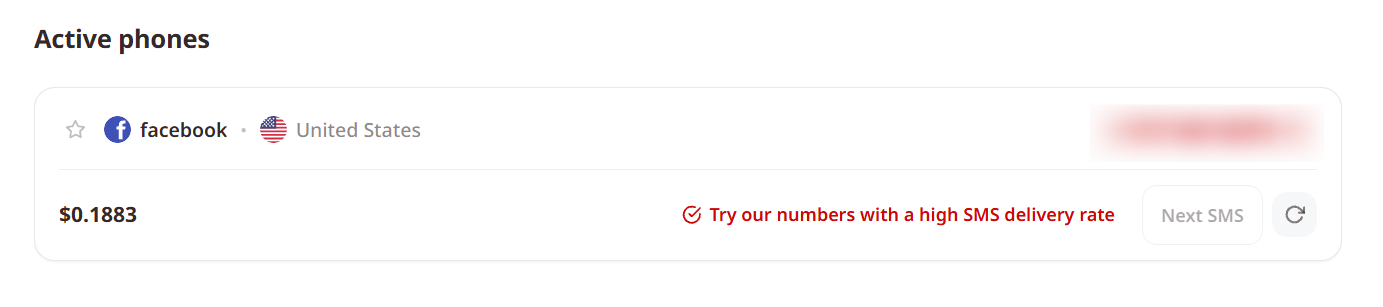
6. Wait for the code, which usually arrives within a few minutes, then copy it and complete verification.
A few boundaries are worth knowing in advance. These numbers receive verification messages only — they do not make calls, send SMS, or work as a long-term line. By default one number covers one SMS for one service; contact support if you need a single number to serve several. You are charged only when the message is actually received, and a refund applies when registration with the number provided is not possible. The number cannot be used later to recover access, so set up an email address or another recovery method the platform supports at the time you register.
Bringing It Together
Separating social profiles serves two related goals: individuals decide which audience sees which part of their life, and companies keep brand assets independent of any one employee's phone. Both run into the same requirement, since platforms want a distinct number for each registration. Tiger SMS covers that step by delivering the verification code to an online number, with charges applied only when the message arrives.
If you want to register a new profile without using your personal line, create a Tiger SMS account, choose your platform and country, and start verification in a few minutes. If your team needs virtual numbers at scale, create an account and contact support to discuss bulk pricing, API access, and the countries and services that fit your work.