
How to Get a Free Temporary Phone Number (and When It's Worth Paying)
Contents
What Counts as a Free Temporary Number?
Free options fall into three groups
Option 1: Public Receive-SMS Websites
Option 2: Free Calling and Texting Apps
Free Temporary Number Options Compared
Tips for Using a Free Temp Number
If you decide a free temp number is good enough, a few habits keep the risk down
A free temporary phone number is fine when
When to Pay for a Number Instead
A Reliable Paid Option: Tiger SMS
1) Is a free temporary phone number safe?
2) Can I get a free temporary number for WhatsApp or Telegram?
3) What's the difference between a disposable phone number and a second phone number?
You need a number for one signup. You don't want to hand over your personal one, and you'd rather not pay for something you'll use once. So you look for a free temporary phone number.
There are real ways to get one. Each has a catch, and for some uses the catch is a dealbreaker. This guide covers the three main free options, what they're good for, where they fail, and when a cheap paid number is the more reliable choice.
What Counts as a Free Temporary Number?
A temporary number is any number you use for a short time instead of your own: to register, to receive one code, or to keep your personal number private. People also call it a disposable phone number or a second number.
Free options fall into three groups:
-
Public "receive SMS" websites with shared inboxes.
-
Free calling and texting apps that give you your own number.
-
Free trials of number services.
Option 1: Public Receive-SMS Websites
These sites list phone numbers anyone can use. You pick a number, enter it in a signup form, and refresh the page to see incoming messages. No account, no app, no payment.
Good for:
-
testing a form on your own site;
-
signing up for something you don't care about losing.
The catch:
-
Everyone sees the inbox. Every message to that number shows up for every visitor. If you receive a login code, so does anyone else on the page, and they can use it to take over the account.
-
The numbers are burned. The same numbers are used over and over on popular services. Platforms notice and often reject them, so the code never comes.
-
You can't reuse it. If the service asks you to verify again later, the number may be gone or in someone else's hands.
A public free online phone number is the fastest option and the least safe. Treat anything you register with it as public.
Option 2: Free Calling and Texting Apps
Some apps give you a real number of your own at no cost. Two well-known examples:
Google Voice. Free for personal use, but the no-charge version only offers US numbers, and setup requires an existing US phone number to verify you. If you're not in the US, or don't have a US line, you usually can't get one.
TextNow. Gives you a free US or Canadian number, supported by in-app ads. The catch: TextNow's own help pages say free numbers are recycled after a period of inactivity, and once a number is released, it can't be restored. Keeping it means using it regularly or paying to lock it.
Good for:
-
a free second phone number for calls and texts in the US or Canada;
-
keeping your personal number off forms and listings.
The catch:
-
Country limits. Free numbers are usually US or Canada only.
-
They're VoIP. These are internet-based (VoIP) numbers. Many services, including messengers and payment apps, check the line type and refuse VoIP numbers.
-
Number recycling. A free number you stop using can be reassigned, and the next owner may receive your codes.
Option 3: Free Trials
Some number services offer a short free trial. It can work for a single verification, but check the terms first: some trials ask for a card and renew automatically, and the numbers may have the same VoIP limits as free apps.
Free Temporary Number Options Compared
|
Public SMS sites |
Free apps |
Paid activation number |
|
|
Cost |
Free |
Free, with ads or limits |
A few cents per code |
|
Private inbox |
No |
Yes |
Yes |
|
Accepted by strict services |
Rarely |
Often rejected (VoIP) |
Built for it (non-VoIP) |
|
Countries |
Whatever the site lists |
Mostly US/Canada |
Many countries |
|
Risk of someone else getting your code |
High |
Low, until the number is recycled |
Low |
Tips for Using a Free Temp Number
If you decide a free temp number is good enough, a few habits keep the risk down:
-
Use it only for low-stakes accounts. Never for banking, payments, crypto, or your main email.
-
Act fast. On a public site, enter the code as soon as it appears. The longer it sits on the page, the more people can see it.
-
Use a unique password. If someone else grabs the code, a reused password makes it easier to get into your other accounts too.
-
Expect to lose access. If the service asks you to verify again, a public or recycled number may no longer be yours.
-
Don't link it to anything else. Avoid using the same free number as a recovery option for other accounts.
Searching for a temporary phone number free of charge often leads to pages full of numbers that were used long ago. If the first few numbers you try don't receive a code, the service may have blocked them, and trying more of the same rarely helps.
When a Free Number Is Enough
A free temporary phone number is fine when:
-
the account doesn't matter if you lose it;
-
the service doesn't check the line type;
-
you're in the US or Canada and want a long-term second line for calls and texts.
When to Pay for a Number Instead
A paid number makes sense when:
-
you're registering an account you plan to keep;
-
the service rejects VoIP or public numbers;
-
you need a number from a specific country;
-
you don't want strangers to see your code.
For these cases, the cost is usually small compared with the time lost on codes that never arrive.
A Reliable Paid Option: Tiger SMS
Tiger SMS sells temporary numbers for SMS verification. They're non-VoIP numbers from live operator SIM cards, which matters for services that reject VoIP. Each number is sold privately to you, so nobody else sees the code.
How it works:
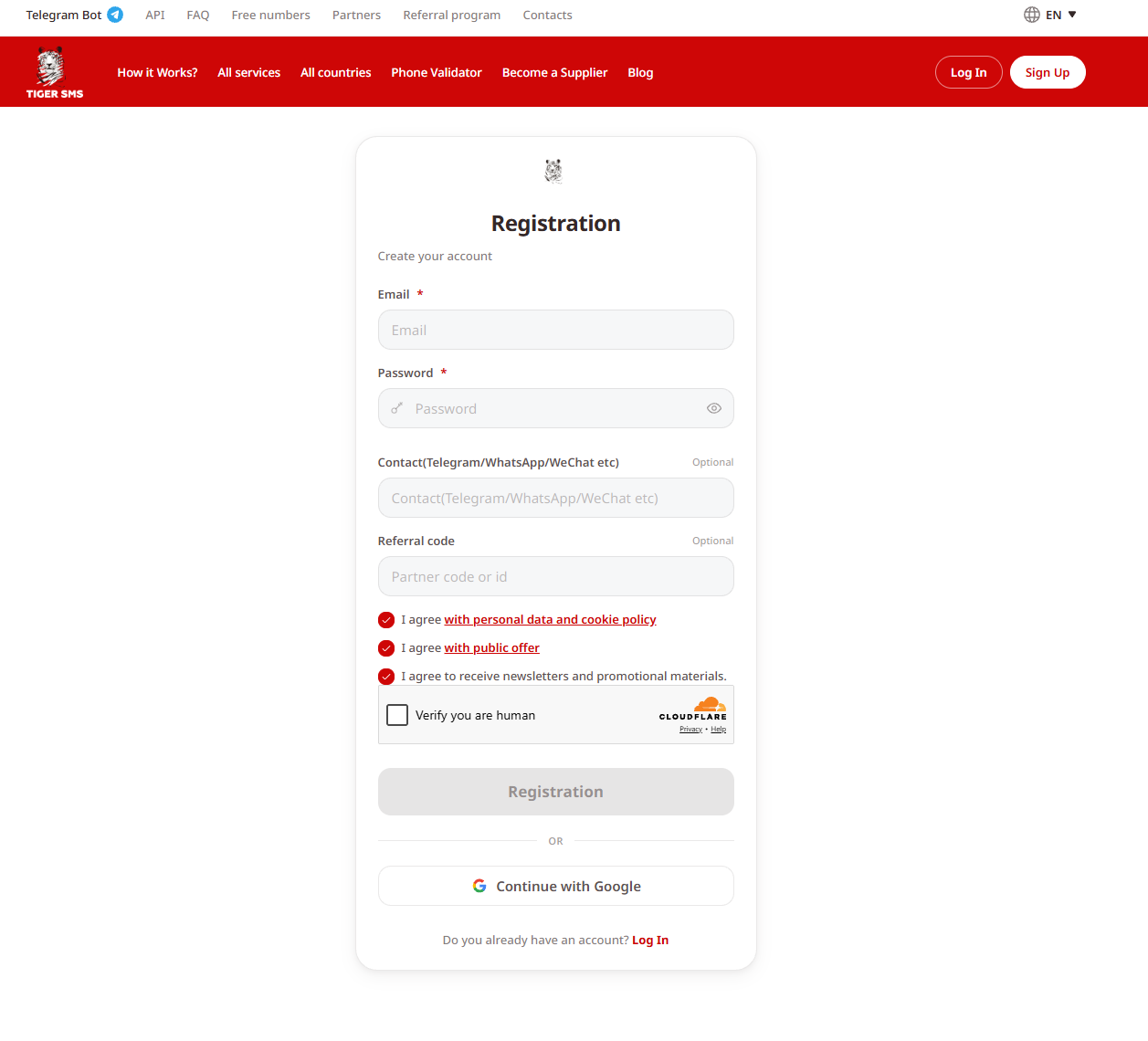
1) Sign up with an email. No other details are required.
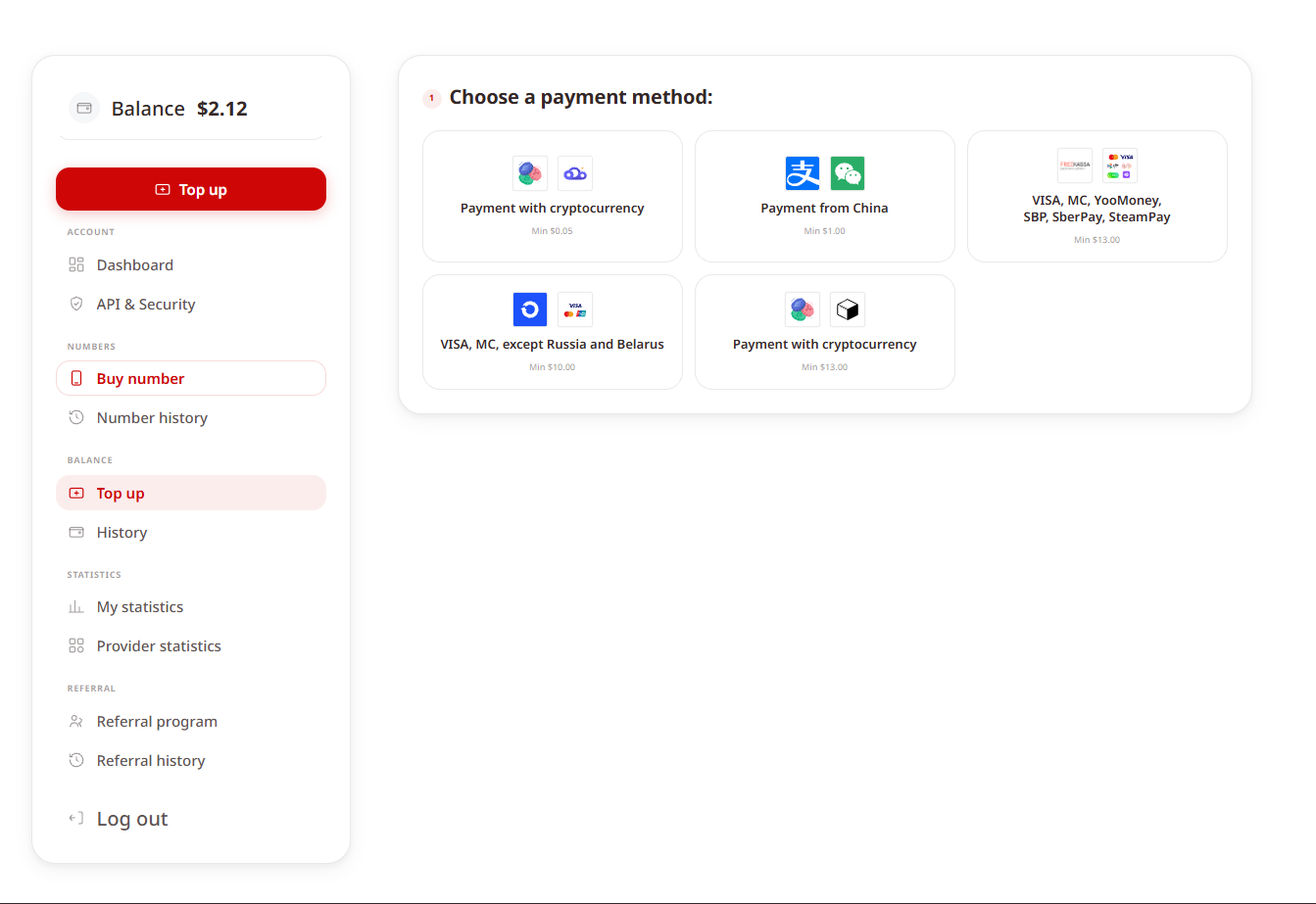
2) Top up your balance. Bank cards, e-wallets, and cryptocurrency are accepted.
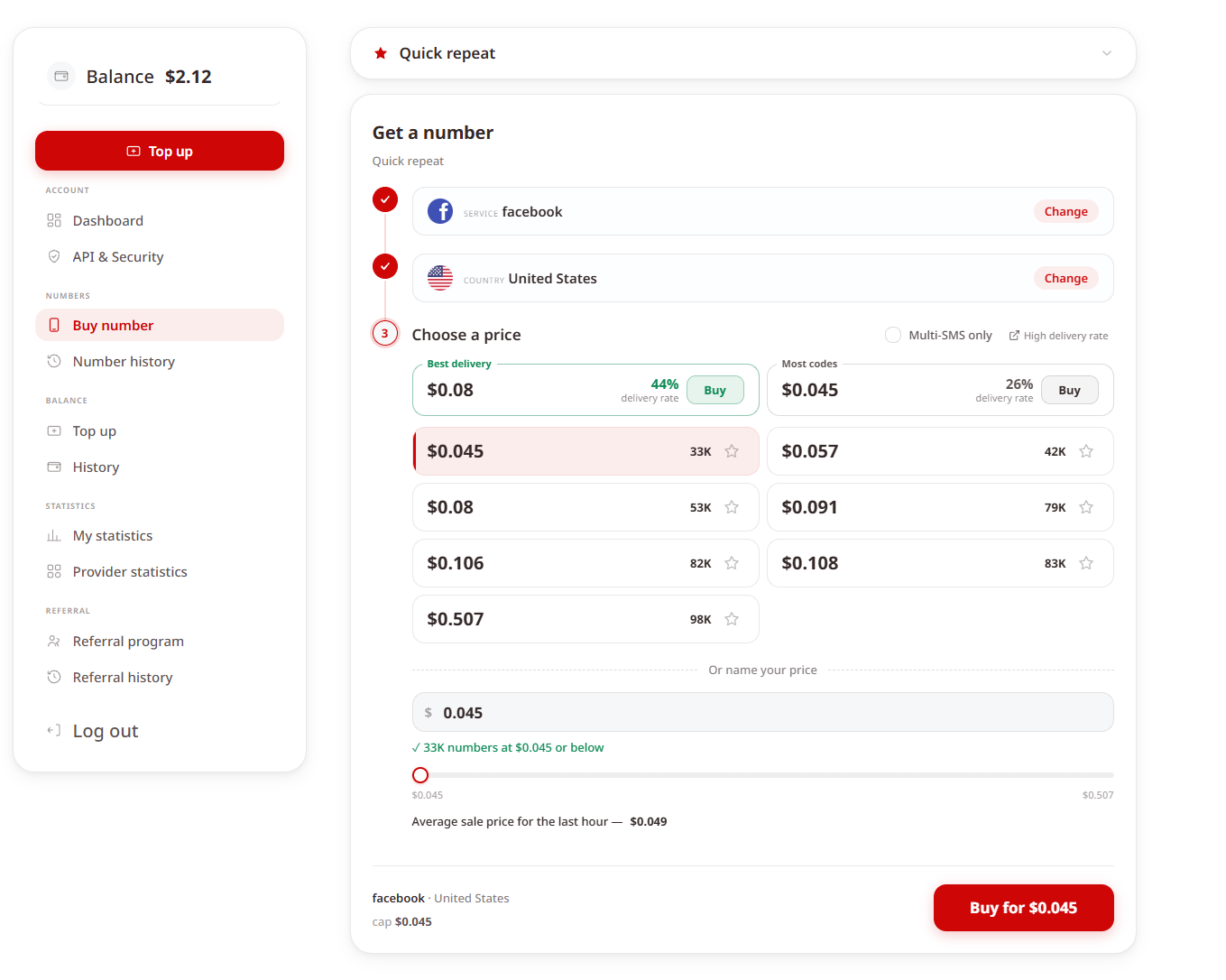
3) Choose the service and country. Pick the app or site you're registering on and a country with numbers available.
4) Enter the number and request the code. It usually arrives in your Tiger SMS account within a minute or two.
No code? Cancel. If the SMS doesn't come, cancel the number and the money goes back to your balance. You only pay for SMS you actually receive.
Prices start from a few cents, depending on the service and country. A standard number receives one SMS. If you expect more than one code, choose a number marked as multi-SMS when you buy.
One habit to keep with any temporary number, free or paid: after you register, add your own email and an authenticator app to the account, so you don't depend on that number later.
FAQ
1) Is a free temporary phone number safe?
For throwaway signups, it's fine. For anything you care about, a public number is risky because other people can read your codes.
2) Can I get a free temporary number for WhatsApp or Telegram?
You can try, but public numbers are often blocked, and many free app numbers are VoIP, which WhatsApp doesn't support. A private non-VoIP number is more reliable.
3) What's the difference between a disposable phone number and a second phone number?
A disposable number is used once and dropped. A second phone number is usually kept for ongoing calls and texts. Free apps suit a second line; paid activation numbers suit one-off verifications.
4) How long does a free temporary number last?
It depends on the source. Public numbers can change at any time, and free app numbers can be recycled after inactivity.
Bottom Line
You can get a free temporary phone number from public SMS sites, free calling apps, or trials. Public sites are fast but shared and often blocked. Free apps give you a private number, but mostly in the US or Canada, and as VoIP. When the account matters or the service is strict, a paid non-VoIP number is the reliable choice. Tiger SMS gives you one for a few cents, and refunds you if the code doesn't arrive.