
What Proxies Are Suitable for SMS Activations in 2026: Full Breakdown + How to Avoid Blocks
Contents
Why SMS Codes Don’t Arrive: The Role of Proxies and IP Environment
What Proxies Are Suitable for SMS Activations in 2026
Why Proxies Directly Affect SMS Delivery
The Main Mistake: Geo Mismatch Between Number and Proxy
Why Even “Good” Proxies Can Be Unstable
What Proxies Actually Work in 2026
Practical Recommendations: How to Avoid Blocks

Introduction
In recent years, SMS activations have remained one of the key tools for account registration — both in affiliate marketing and in tasks related to automation, marketplaces, and social media platforms. However, If previously it was enough to simply buy a virtual number and receive a code, in 2026 this is no longer sufficient.
Platforms have become significantly more sensitive to how exactly the registration process is performed. They analyze not only the phone number itself, but also the entire environment in which it is used: IP address, network type, geo location, user behavior, and even the history of activity. As a result, users increasingly face situations where the SMS code does not arrive at all, arrives with delays, or the account gets blocked immediately after creation, despite the number being entered correctly.
At this stage, many users make the mistake of assuming that the problem lies in the SMS activation service. In reality, in most cases, the key factor is the proxy and the overall IP environment, which either increases the platform’s trust or reduces it instantly.
In this article, we will take a detailed look at which proxies are actually suitable for SMS activations in 2026, why even high-quality numbers may not work with the wrong infrastructure, and what mistakes most often lead to blocks.
Why SMS Codes Don’t Arrive: The Role of Proxies and IP Environment
Before sending an SMS code, most platforms — from social networks to marketplaces — evaluate the user through anti-fraud systems. This happens even before the system decides whether to send the code and takes only a fraction of a second.
Several parameters are analyzed at once: the IP address and its reputation, the network type (mobile, residential, or datacenter), geo consistency, IP activity history, and the frequency of registrations. If the combination of signals looks suspicious, the platform may not send the SMS at all, delay it, or immediately restrict the newly created account.
This is why situations where “the number doesn’t work” are often actually caused by proxy-related issues. From the platform’s perspective, the phone number is only one factor, while the IP environment determines whether the action looks natural.
What Proxies Are Suitable for SMS Activations in 2026
For SMS verification tasks, it is important not just to use proxies, but to understand how each type of IP is perceived by anti-fraud systems. In this context, the differences between proxy types become critical.
|
Proxy Type |
Suitable for SMS Activations |
Trust Level |
Notes |
|
Datacenter |
❌ No |
Low |
Easily detected and blocked |
|
Residential |
⚠️ Partially |
Medium |
Often shared pools |
|
Mobile |
✅ Yes |
High |
Closest to real users |
Datacenter proxies are practically not used for SMS activations in 2026, as they are quickly identified as artificial traffic and are often already listed in suspicious IP databases.
Residential proxies appear more natural because they use real user IPs, but they usually operate in shared pools, where a single address is used by multiple users. This reduces reliability and makes results unstable.
Mobile proxies are considered the most effective option, as they use IP addresses from mobile operators and closely match real user behavior.
Why Proxies Directly Affect SMS Delivery
It is important to understand that an SMS service only provides the phone number, while the decision to send the code is made by the platform itself. If the IP address looks suspicious, the process can be stopped before the SMS is even generated.
In practice, this leads to several scenarios: the code is not sent at all, arrives with a delay, requires additional verification, or the account is immediately restricted. As a result, users often blame the SMS service, while the real issue lies in the IP environment.
The Main Mistake: Geo Mismatch Between Number and Proxy
One of the most common causes of issues is the mismatch between the phone number’s geo and the proxy location. For example, using a number from one country while connecting through a proxy from another creates a clear anomaly for the platform.
In such cases, the system may not send the SMS code, increase verification requirements, or immediately flag the account as suspicious. This is especially critical for social networks and advertising platforms.
The basic rule remains unchanged: the geo of the proxy and the phone number must match.
Why Even “Good” Proxies Can Be Unstable
Even when using mobile or residential proxies, results may still be inconsistent. The main reason lies in how the infrastructure is organized.
If proxies operate within shared pools, a single IP can be used by dozens of users. Such an address may have a negative history associated with mass registrations or suspicious activity, which automatically lowers trust.
Additionally, chaotic IP rotation and lack of session control make user behavior appear unnatural. As a result, even technically suitable proxies may perform poorly.
What Proxies Actually Work in 2026
In modern conditions, it is not just the proxy type that matters, but the level of control over it. Stable performance is achieved when the IP environment closely resembles real user behavior and is not shared.
Such infrastructure typically includes mobile IPs from real operators, no shared access, dedicated IP assignment, predictable rotation, and clean usage history. This combination allows for stable SMS delivery and reduces the risk of blocks.
For example, solutions like Coronium.io operate on real devices with SIM cards, where each IP is used individually and not shared. This eliminates issues associated with shared pools and improves stability in SMS activation workflows.
Practical Recommendations: How to Avoid Blocks
To achieve stable results, it is important to consider not only the choice of proxies but also behavior during registration. Even high-quality infrastructure will not deliver expected results if used incorrectly.
In practice, it is recommended to use one IP per registration session, avoid mass actions from a single address, maintain geo consistency, avoid changing IP during SMS verification, and use clean browser profiles. It is also important to avoid low-cost proxies with unknown history, as they are a common source of instability.
How Tiger SMS Enhances Results
Even with properly configured proxies, the second part of the setup — the phone numbers — remains critical. Tiger SMS provides access to over 100,000 virtual numbers from different countries, with fast SMS delivery and payment only for successfully received codes.
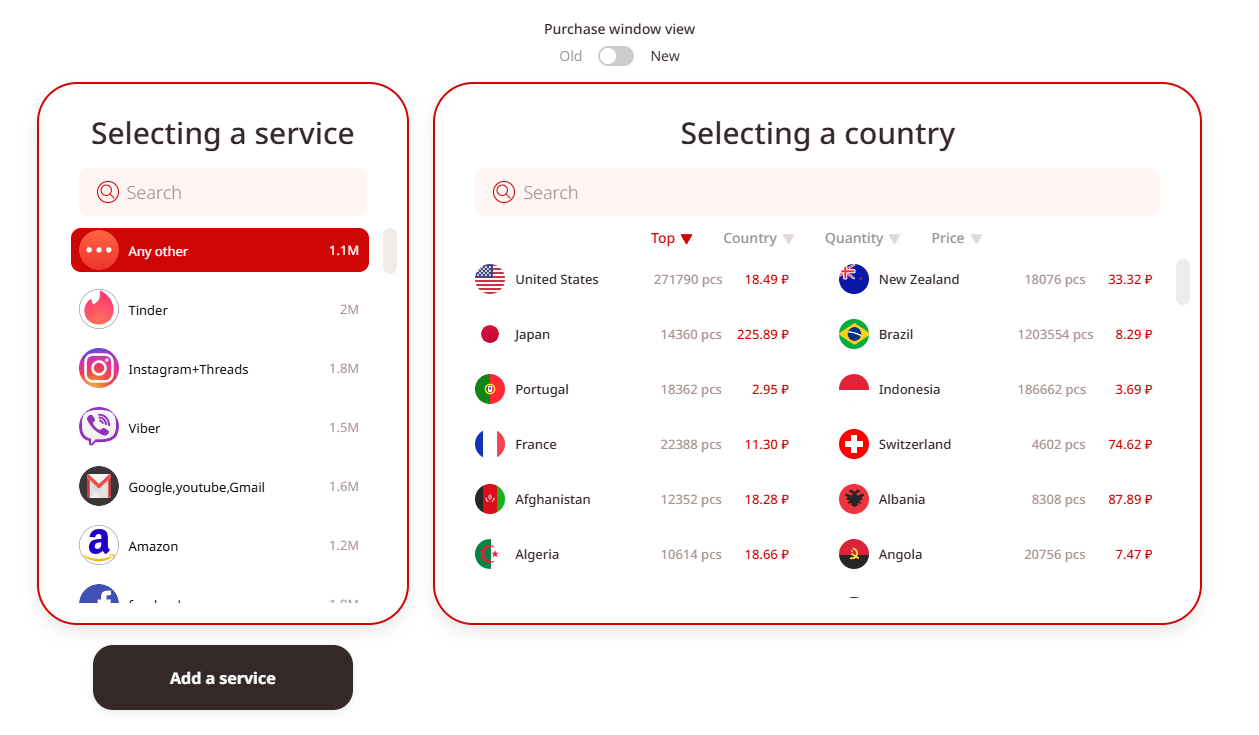
When combined with correctly configured proxies, this significantly improves performance: SMS codes are delivered faster, the number of retries decreases, and the registration process becomes more predictable.
Conclusion
In 2026, working with SMS activations is no longer a simple technical task where choosing a number provider is enough. The outcome depends on a combination of factors, and the key role is played not by the number itself, but by the environment in which the registration takes place.
Proxies directly influence whether an SMS code will be sent, how the platform evaluates the user, and how “clean” the account appears after creation. Even high-quality numbers cannot compensate for poor IP infrastructure. If proxies have a weak reputation, are shared, or do not match the number’s geo, this almost always leads to instability, additional checks, and blocks.
At the same time, it is important to understand that modern workflows rely on the combination of tools rather than individual solutions. Stable results are achieved only when proxies are properly selected, geo consistency is maintained, the environment is clean, and reliable numbers are used. This combination allows not just to receive SMS codes, but to build scalable and predictable account workflows.
If you are experiencing unstable SMS delivery, registration errors, or frequent account bans, the first thing to evaluate is not the SMS service, but the proxy setup and overall infrastructure. In most cases, this is where the main opportunity for improvement lies.
FAQ
1) What proxies work best for SMS activations in 2026?
The most stable results come from mobile proxies (4G/5G), as they use IP addresses of real mobile operators and closely match the behavior of regular users. However, it is important that such proxies are not shared with other users and have a clean usage history. Otherwise, even mobile IPs can trigger suspicion in anti-fraud systems.
2) Why am I not receiving SMS verification codes when using proxies?
In most cases, the issue is not related to the phone number, but to the IP address. If the proxy has a low trust level, has been used for mass registrations before, or does not match the geo of the phone number, the platform may block the SMS request before the code is even generated. Unstable connections and sudden IP changes can also negatively affect the result.
3) Can residential proxies be used for SMS activations?
Residential proxies can work, but the results are often inconsistent. The main issue is that they are usually provided through shared pools, where the same IP is used by multiple users. This makes it impossible to control the IP’s reputation and increases the risk of blocks.
4) Why are datacenter proxies not suitable for SMS verification?
Datacenter proxies are easily identified as artificial traffic that is not associated with real users. They are often used at scale and are already present in anti-fraud databases. As a result, platforms either do not send SMS codes or immediately restrict accounts created through such IPs.
5) How important is geo matching between the phone number and the proxy?
Geo matching is one of the most important factors for successful SMS activation. If the phone number and IP address belong to different countries, the platform treats this as suspicious behavior. This can lead to failed SMS delivery or immediate account restrictions after registration.
6) How can I improve SMS activation success rates?
To achieve stable results, it is important to build a proper setup: use high-quality phone numbers, reliable proxies with a high level of trust, maintain geo consistency, and avoid sudden IP changes during registration. Additionally, working with clean browser profiles and avoiding excessive activity from a single IP can significantly improve overall performance.